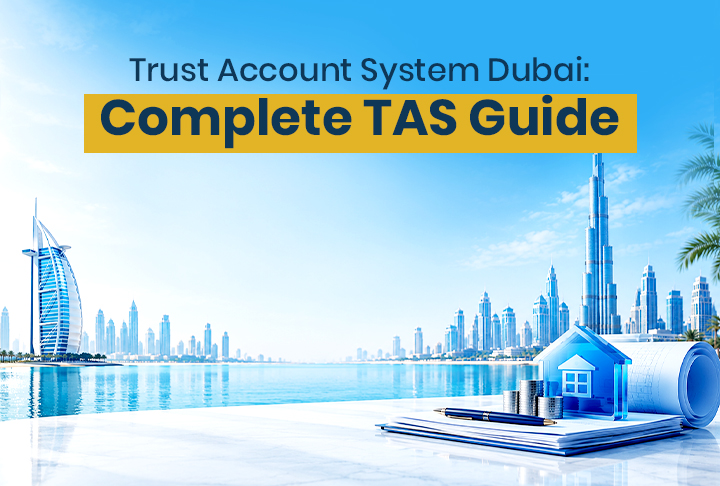
Trust account system Dubai rules exist for one reason: to protect money that buyers pay for homes that have not been built yet. Off-plan buyer payments must be held and released under supervision, and the Trust Account System (TAS) is how that oversight is managed. This guide explains how it works, what it covers, and why registration matters. It is general information, so confirm details with the Dubai Land Department or a qualified adviser.
What Is the Trust Account System Dubai Developers Use?
The Trust Account System is the platform linked to the Dubai Land Department (DLD) and the Real Estate Regulatory Agency (RERA) for managing project escrow accounts. Dubai law requires a developer to hold off-plan buyer payments in a dedicated escrow account with an approved bank, separate from its own funds. TAS gives regulators a record of each project, its account, and its payments, so money can be tracked from deposit to release.
How the Trust Account System Dubai Process Works
In general, the process runs in this order:
- The developer registers the project and obtains the required approvals.
- An escrow account is opened for that project with an approved bank.
- Buyers pay instalments into the escrow account, not to the developer directly.
- A RERA-approved consultant certifies construction progress.
- Funds are released in stages that match certified progress.
- A retention portion may be held back for a period after completion.
Each project has its own account, so money from one project cannot fund another. Good project documentation makes each release request faster to approve. Delays in certification usually mean delays in funding, so plan the timeline with your consultant.
What TAS Covers
TAS covers the registered project, its dedicated escrow account, buyer payments, and stage-based releases. It also supports reporting, so regulators can check that deposits and withdrawals match approved construction progress. It does not replace your sale and purchase agreement or your OQOOD registration. It protects the money behind them. Think of it as a ledger that follows the project from launch to handover.
Why Every Off-Plan Project Must Be Registered on TAS
Registration is a legal safeguard, not an optional extra. It prevents developers from selling units without a supervised account, reduces the risk of funds being diverted, and gives buyers a clear way to confirm that payments are protected. Projects that skip it risk regulatory action, fines, and lost buyer trust. For buyers, a project missing from the system is a warning sign. A developer that registers early also avoids sales delays later.
Benefits of TAS for Buyers and Developers
For buyers, the system adds transparency and lowers the risk of paying for a project that stalls with no money left. For developers, it builds credibility with banks and buyers, and a clean record makes sales conversations easier. Regulators gain a clear audit trail, which strengthens confidence in Dubai’s off-plan market as a whole. It also gives lenders and investors a dependable way to assess a project.
Who Is Involved in the Trust Account System Dubai Process?
| Party | Role |
| Developer | Registers the project, sells units, requests releases |
| Bank | Holds the escrow account and processes payments |
| Consultant | Certifies construction progress |
| DLD and RERA | Regulate, approve, and monitor |
| Buyer | Pays instalments into the escrow account |
Common Mistakes with the Trust Account System Dubai Projects Face
- Taking buyer payments before the escrow account is active.
- Delaying progress certificates, which delays fund releases.
- Mixing project money with company funds.
- Keeping weak records. Clear progress reporting avoids queries.
- Buyers failing to check a project’s registration before paying.
How Built Pulse Can Help
Built Pulse helps developers and project teams prepare for TAS requirements. We review project documents, monitor the escrow and release steps, and organise reporting so each stage is ready for review. Contact Built Pulse to discuss your project.
Frequently Asked Questions
What is an escrow account in Dubai property, and why does it matter?
When you buy something that isn’t built yet, your money shouldn’t just disappear into the developer’s general bank balance. In Dubai, it doesn’t. Payments go into a separate escrow account linked to that one project, and the Dubai Land Department (DLD) and RERA oversee it.
Does every off-plan project need one?
In practice, yes. A developer registers the project first and opens its escrow account before selling units. Rules do change from time to time, so confirm the current requirements with the DLD instead of relying on an article, including this one.
Can the developer use my money on their other projects?
No, and this is the whole point. Money paid into Project A’s account stays with Project A. If a developer is behind on one tower, your payment can’t be moved to keep a different one running.
So how does the developer get paid?
In stages. A consultant approved by RERA visits the site and certifies how much has actually been built. Money comes out only as the work is confirmed. If the foundations aren’t finished, that part of the payment doesn’t move.
How do I know a project is genuine before I pay?
Ask for the project registration number and the escrow account details, and don’t accept a brochure as proof. Then check them yourself through the DLD or its official digital services. It takes ten minutes and could save you a great deal of trouble. Also, never transfer money to a personal or company account the salesperson gives you in a chat message.
What happens if a developer breaks the rules?
Penalties are possible, such as fines, a halt on sales, or limits on the account. What actually happens depends on the breach, and I wouldn’t promise a buyer any particular outcome.
Closing Thoughts
The escrow system exists so that what you pay is tied to what’s actually been built. That’s good for buyers, and developers who follow it properly get something in return: people trust them more. If you’re buying, check before you pay. If you’re selling, keep your records clean from day one.